
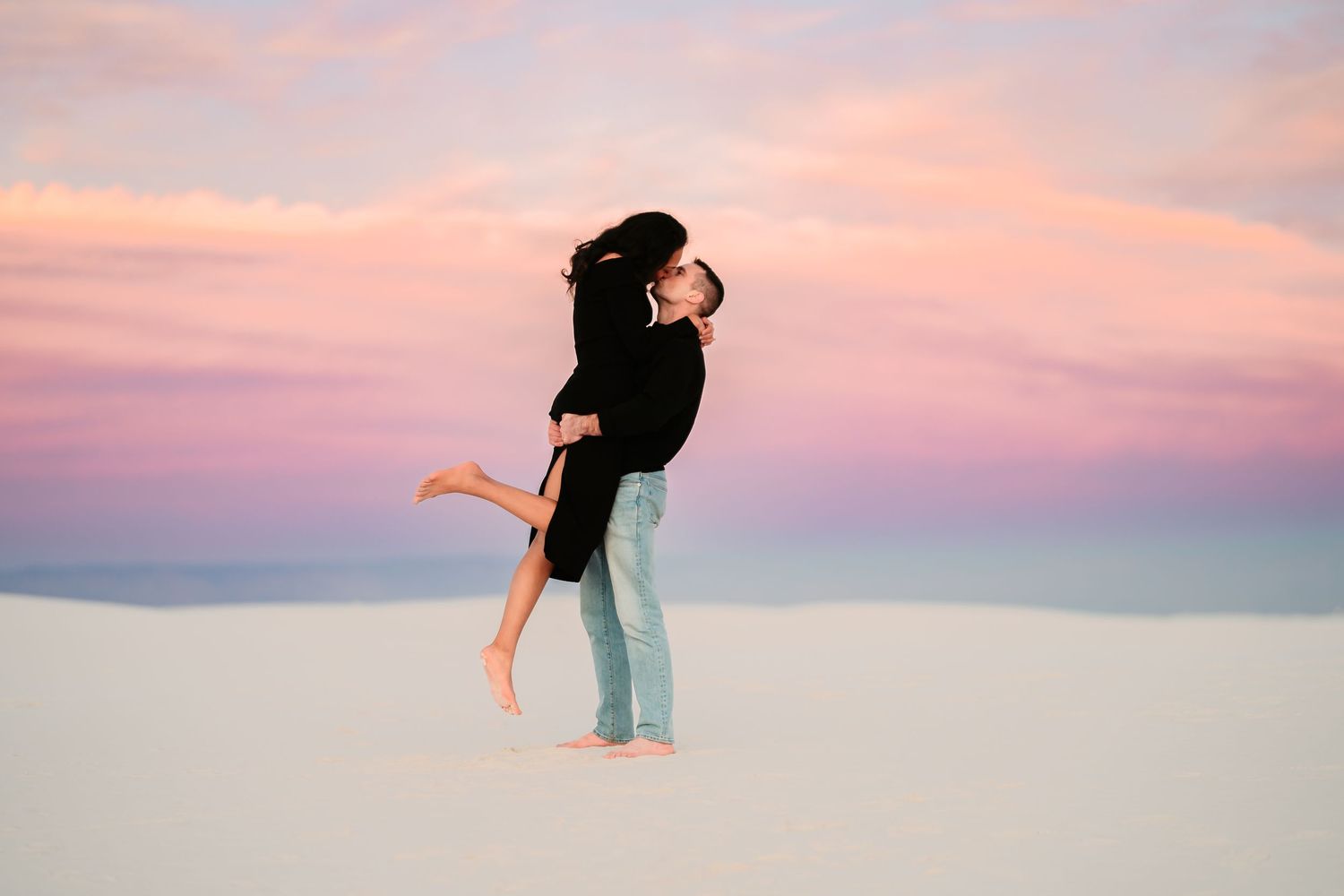
As a New Mexico wedding and portrait photographer, I’ve spent years mastering the "Land of Enchantment." Among all our iconic landscapes, nothing matches the raw, cinematic scale of White Sands National Park. But capturing the dunes correctly requires more than just showing up at sunset.
While many photographers opt for a "light and airy" style that often washes out in the bright gypsum, my approach at Jonathan Tyler Photography is rooted in a bold, cinematic, and hyper-realistic aesthetic. If you want photos that look like a film still, here is the expert’s guide to mastering the dunes.
1. Technical Mastery: Taming the White-Out
White Sands is essentially a giant soft box. Most camera sensors struggle to meter here, often turning the white sand a muddy grey. I utilize the high dynamic range of the Sony Alpha system to manually expose for the highlights in the gypsum while keeping skin tones rich and vibrant.
- The Professional Edge: We don't rely on "fixes" in post. By understanding proper light positioning and using high-end modifiers (like our Westcott or Godox strobes when necessary to fill shadows), we create a "pop" that naturally separates you from the infinite horizon without the need for HDR composites.
2. The Three Phases of Cinematic Light
Timing is the difference between a "snapshot" and a "cinematic event." As a local pro, I break a session down into three distinct lighting windows:
- The Sculpting Hour (90 mins before sunset): This is when the sun creates deep, dramatic shadows in the sand ripples, adding incredible texture and "drama" to the frame.
- The Golden Glow (30 mins before sunset): The gypsum catches a warm, champagne hue that is perfect for romantic, high-end wedding portraits.
- The Twilight Blue (15 mins after sunset): Once the sun dips behind the San Andres Mountains, the sand turns a cool, ethereal blue. This is my favorite time for moody, cinematic storytelling.
3. Navigation & "Virgin Sand" Scouting
To be the best in the state, you have to go where others won't. Most photographers stay near the road. We hike out further to find virgin sand—dunes with zero footprints. This ensures your background is a seamless, infinite canvas that puts the entire focus on you.
Pro Tip: Always check the Holloman Air Force Base missile testing schedule. Highway 70 and the park itself can close for hours. We track these closures for our clients to ensure your session isn't cut short by a surprise closure.
4. Frequently Asked Questions (White Sands Photography)
Do I need to pay for a photography permit for my session?
In most cases for a standard portrait or engagement session, a permit is not required. We focus on a "low-impact" approach, using our professional Sony Alpha gear and minimal setups to keep the focus on you and the landscape.
- When is a permit actually mandatory?
While we strive to keep things simple, certain locations (like White Sands or Valles Caldera) or specific session types require a Special Use Permit. A permit is generally triggered if:
- The Location is Restricted: We want to shoot in an area or at a time (like after-hours) not open to the general public.
- The Session Uses "Sets": You’d like to bring in large props, furniture (like a velvet sofa or floral arch), or extensive lighting rigs that change the "natural" look of the park.
- Park Impact: The shoot is large enough that it requires a Park Ranger to monitor our activity or redirect foot traffic.
Who handles the permit process?
If your dream location requires a permit, we’ve got you covered. We will handle the application and coordination with the Park Service or local municipality. Please note that permit fees are set by the land management agency and will be added to your session total.
How do we know if my favorite spot needs one?
During our location scouting and planning phase, we’ll check the specific regulations for your chosen backdrop—whether it’s the Bosque, the Sandias, or a National Monument. If a permit is needed, we’ll let you know well in advance so your session goes off without a hitch!
What are the best colors to wear?
For a cinematic look, contrast is king. I recommend avoiding whites or tans. Instead, choose bold "Desert Contrast" colors:
- Deep Emerald Green
- Ruby Red or Burgundy
- Mustard Yellow
- Classic Black
When is the best time of year to visit?
For the best light and to avoid the spring dust storms, I recommend late Fall (October/November) or early Spring (late February/March).
Ready to Create Something Iconic?
White Sands is one of the most iconic places on Earth, and it deserves a bold perspective. If you’re looking for a session that feels like a cinematic event, Jonathan and Abbie are ready to tell your story.


